
Holton Studios
Holton Studios is an office development designed to provide small- to medium-sized commercial units for start-ups and emerging businesses. Located within a small business park on the edge of Holton-le-Clay in Lincolnshire, the project offers flexible, characterful workspaces that respond thoughtfully to their rural setting.

Photographers: David Grandorge
The Project
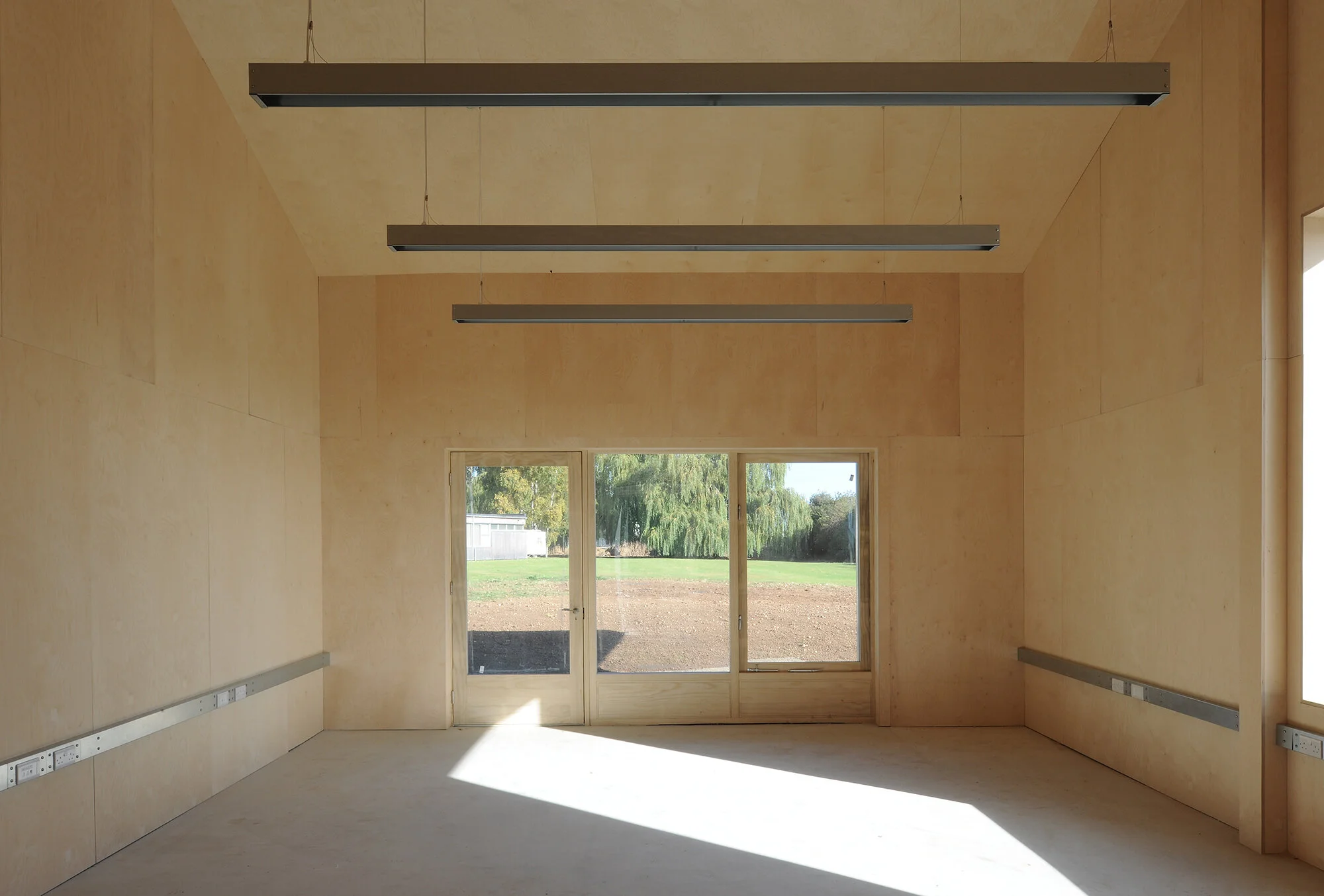
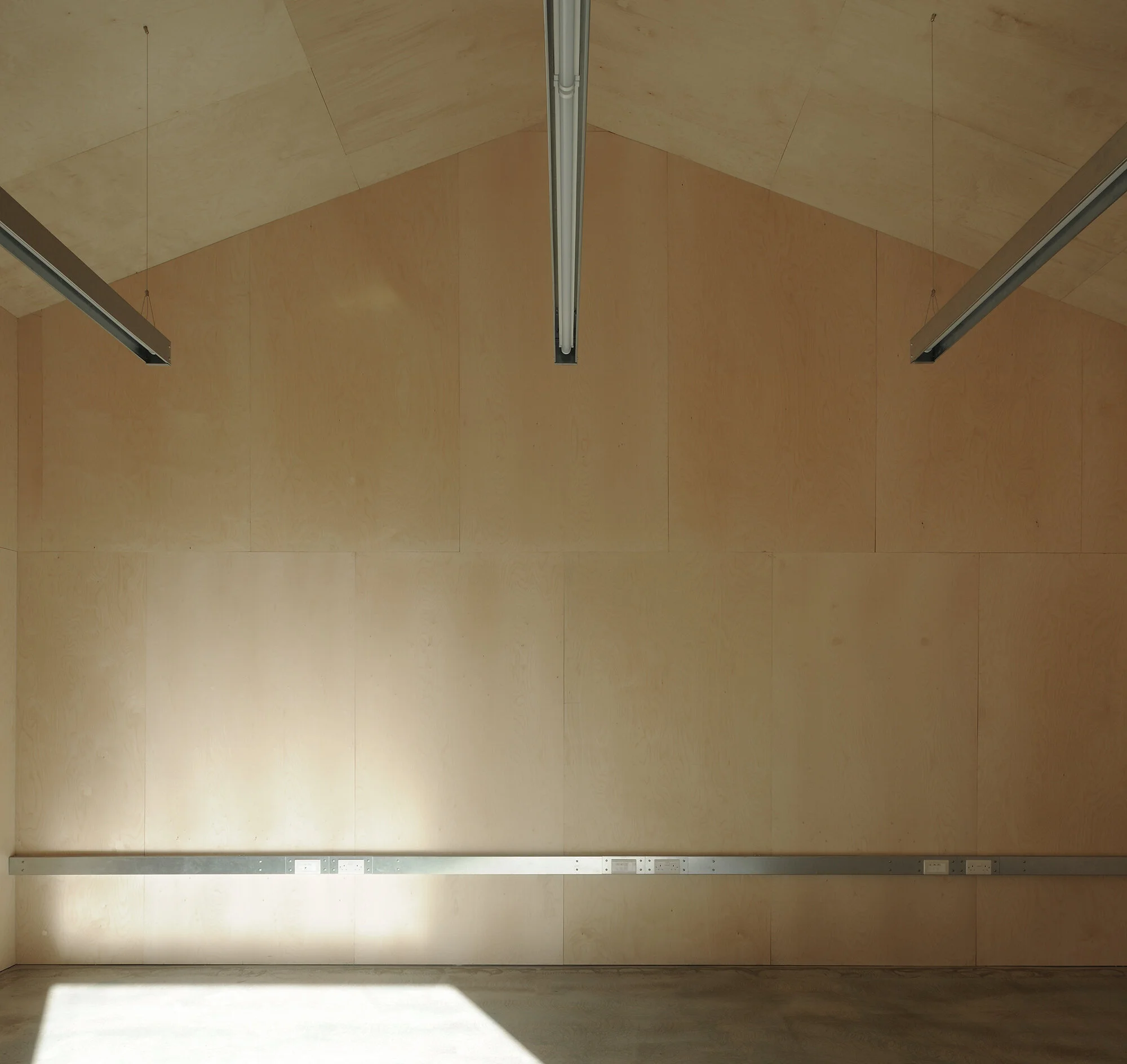
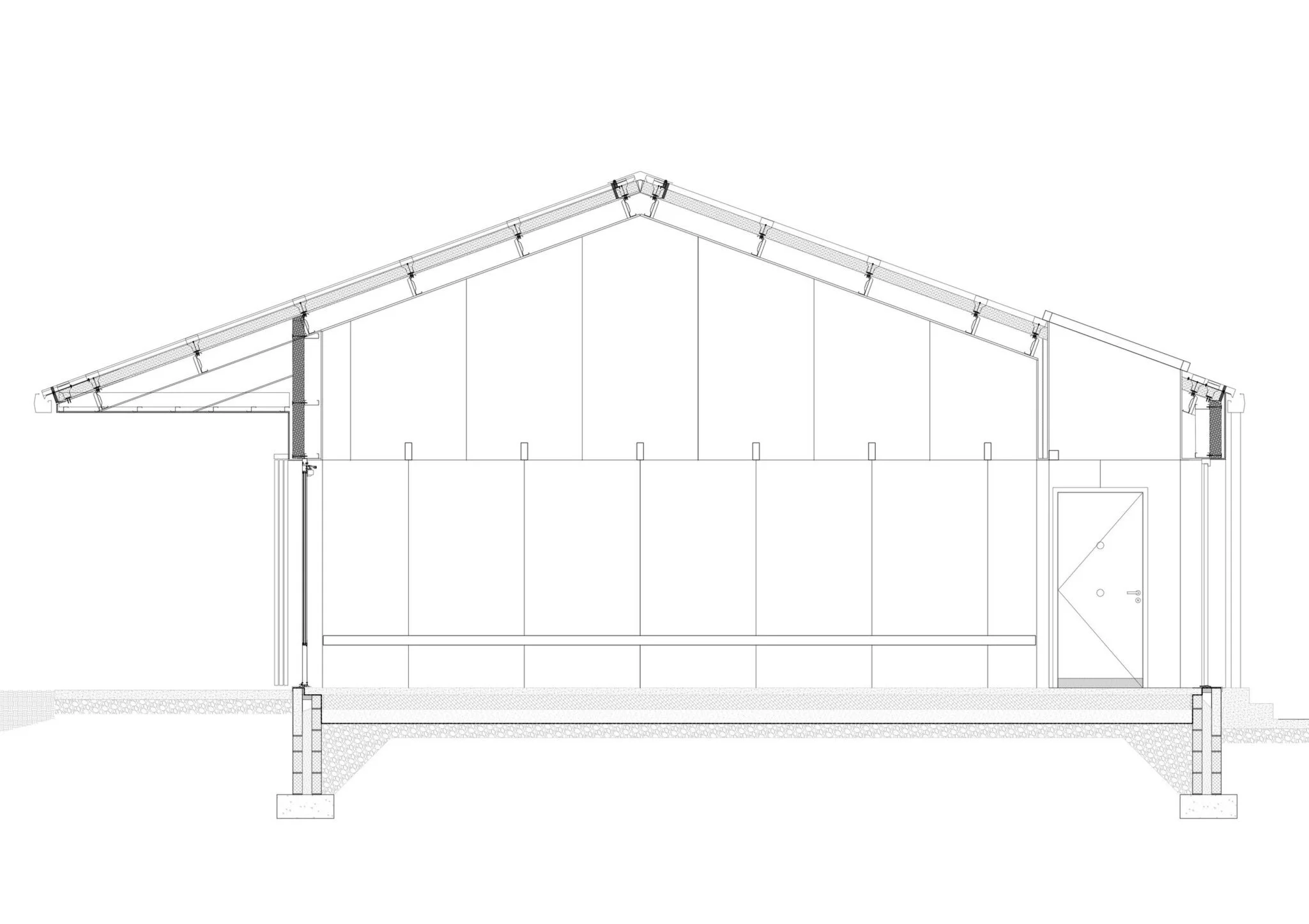
The building is fully tenanted and supports a diverse mix of small businesses. Each unit is designed to feel generous and open, with well-proportioned layouts and exposed pitched roofs that create a lofty internal volume. Internally, spaces are lined with birch plywood, adding warmth, tactility, and a consistent material character throughout the studios.
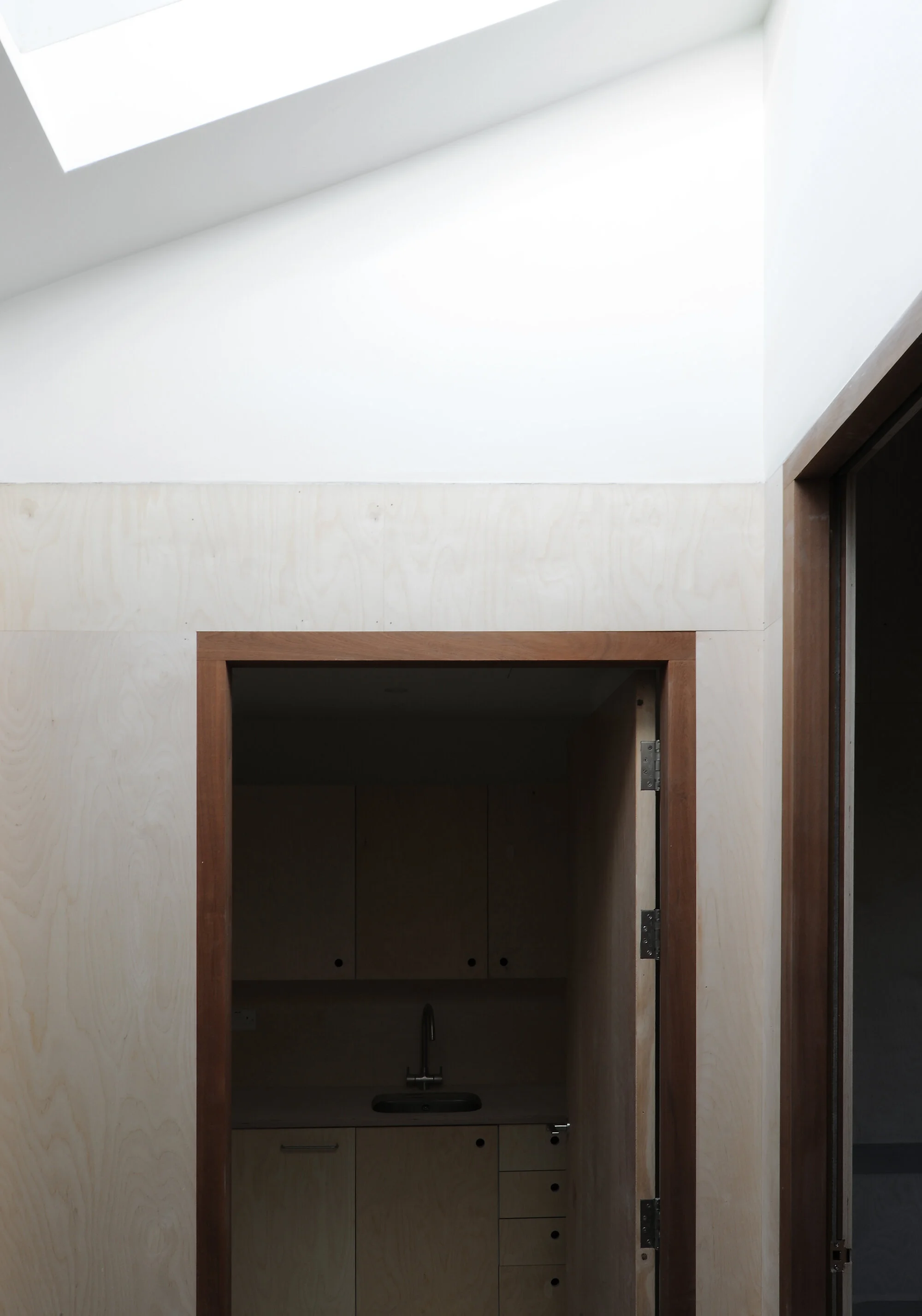
High-quality detailing is evident throughout the building, particularly in elements such as the kitchenettes, WC facilities, and door and window joinery. Galvanised service trunking has been carefully integrated to allow tenants flexibility in arranging desks and equipment without interrupting the plywood wall panelling.
The structure has been designed with adaptability in mind. A portal frame system combined with demountable partition walls allows units to expand or contract as businesses grow or change, helping to future-proof the development and reduce the need for relocation.
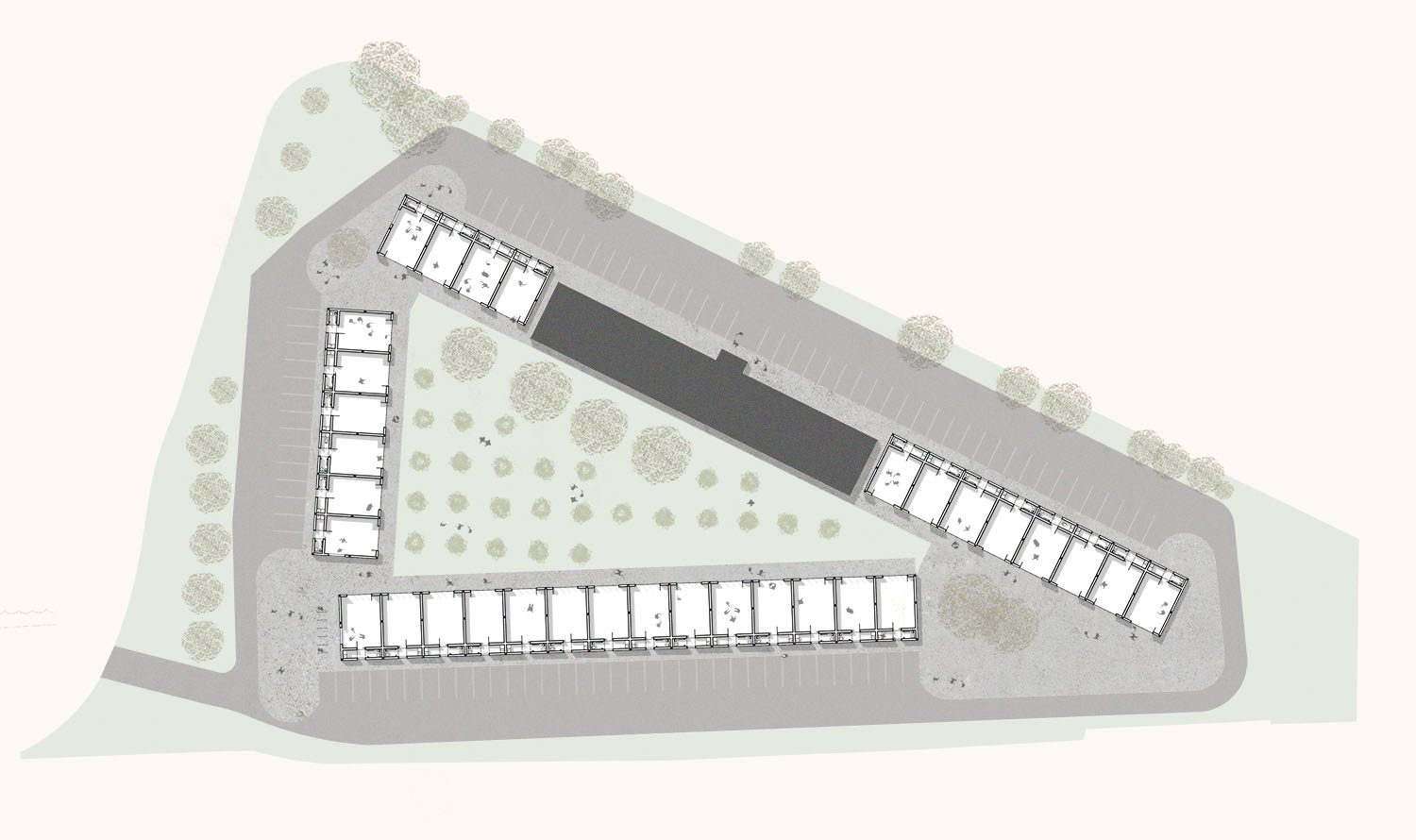
Holton Studios engages directly with its rural context. The design frames views of surrounding grass, trees, and wildlife, ensuring a strong visual connection to the landscape for those working inside. Future phases of the development are intended to form a courtyard arrangement, strengthening the sense of community among tenants.
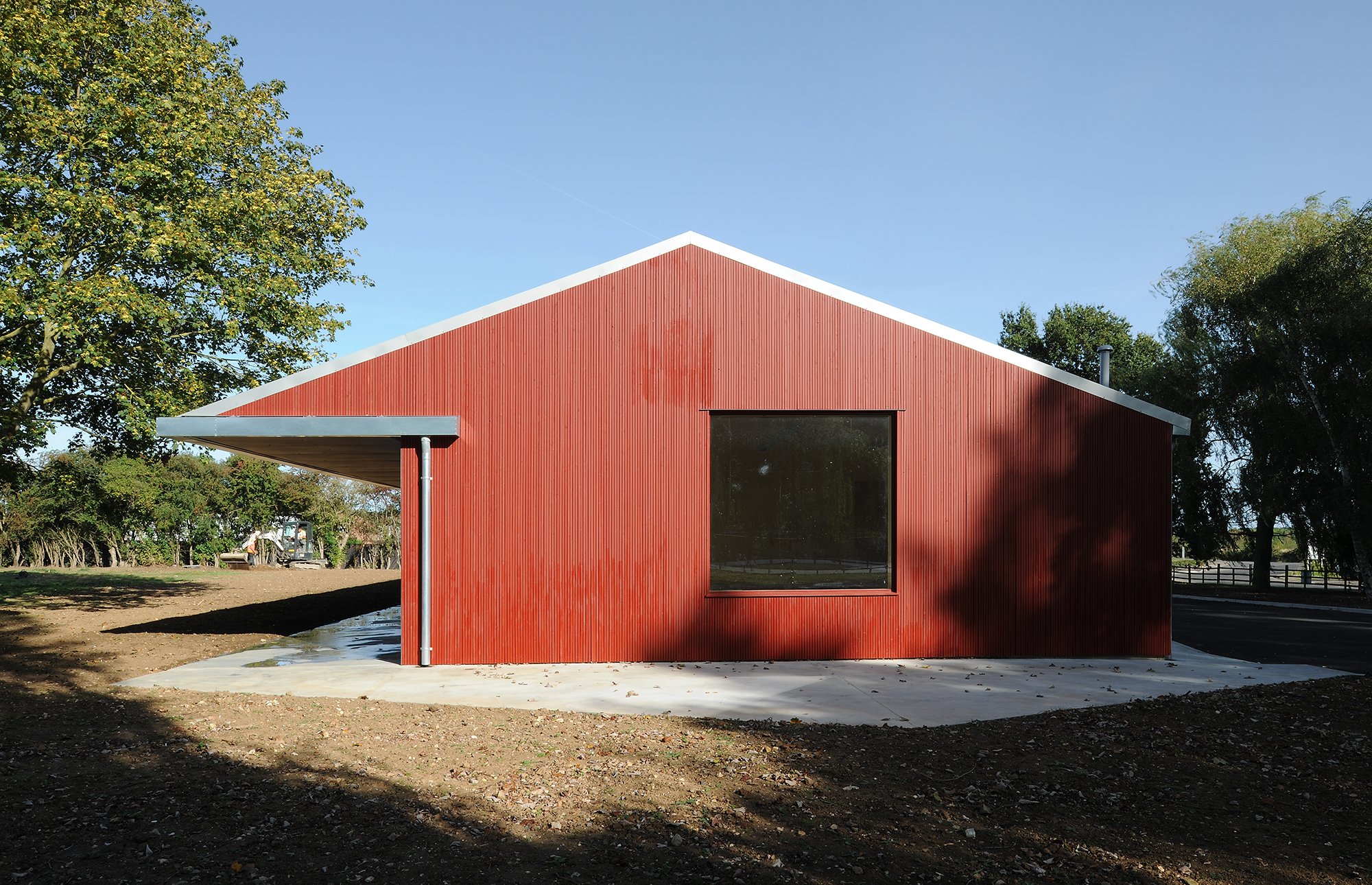
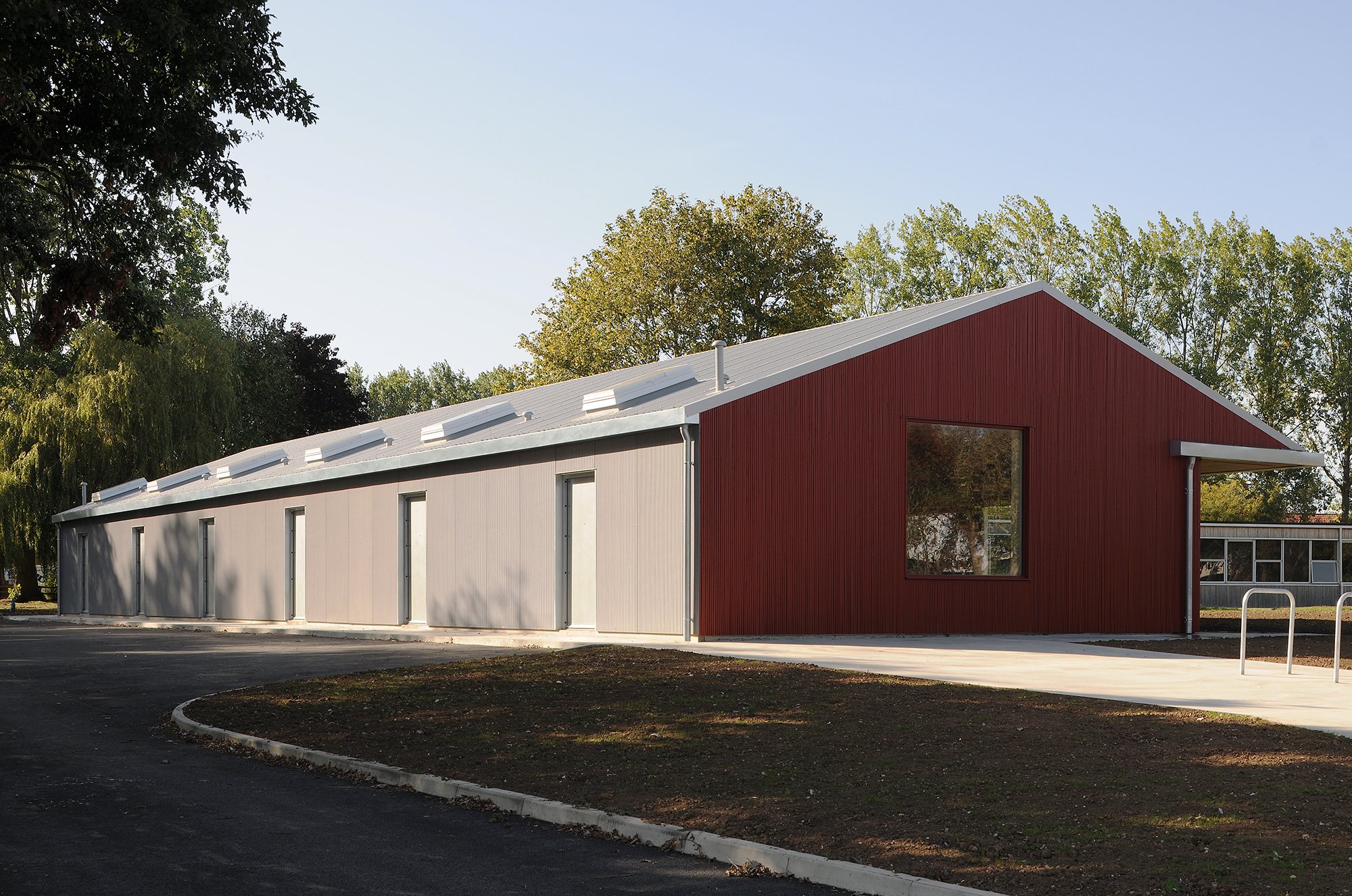
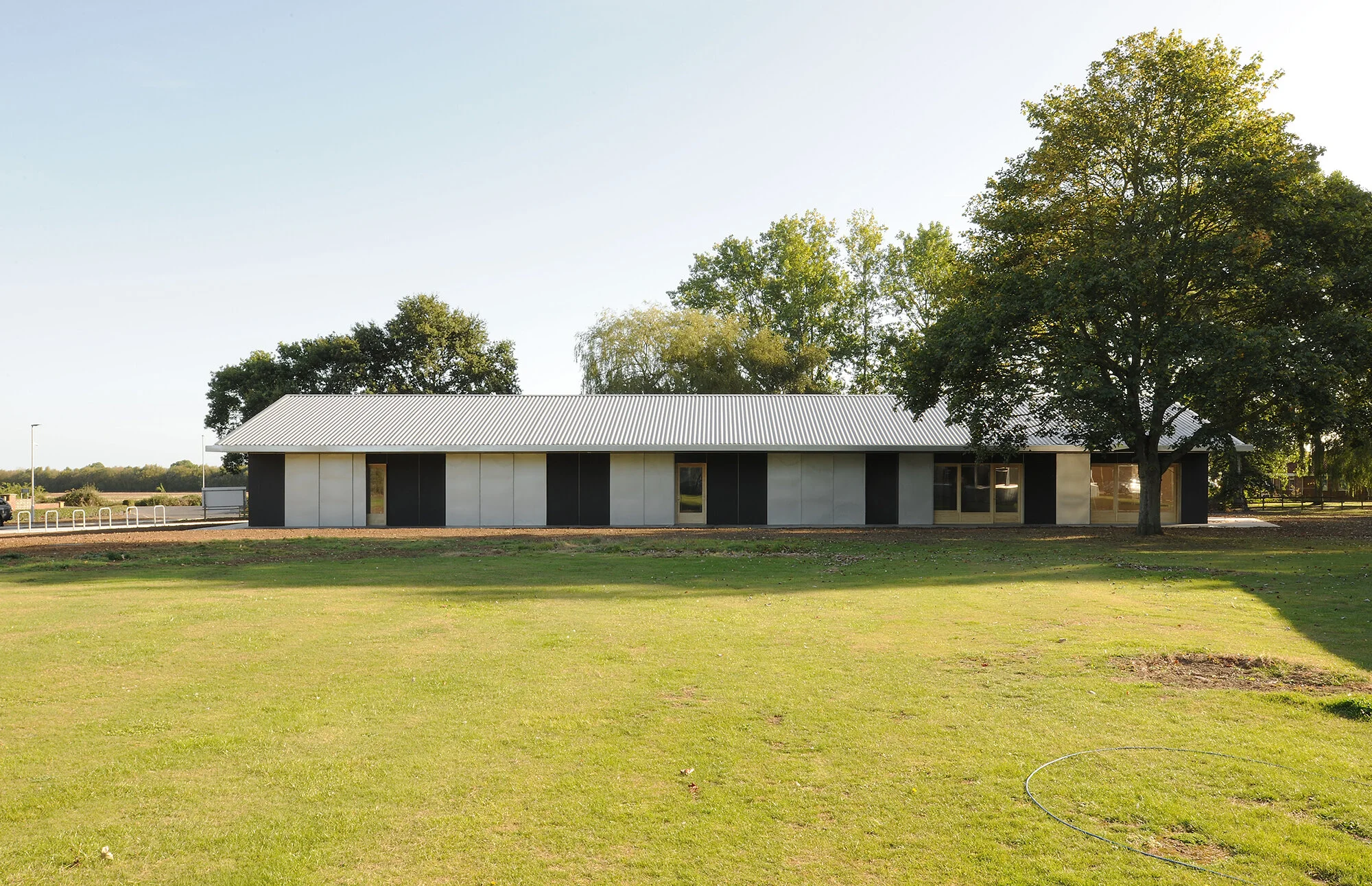
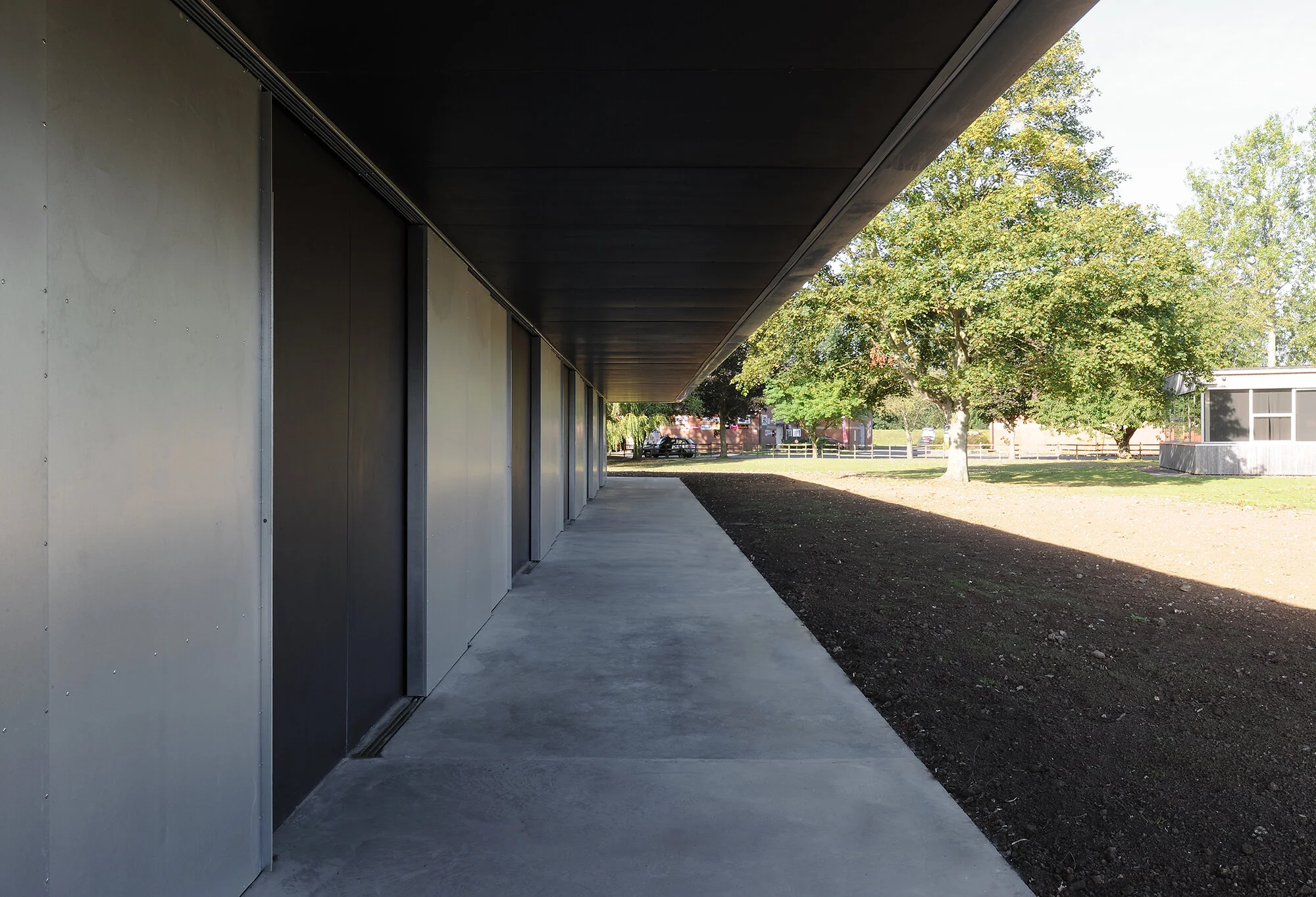
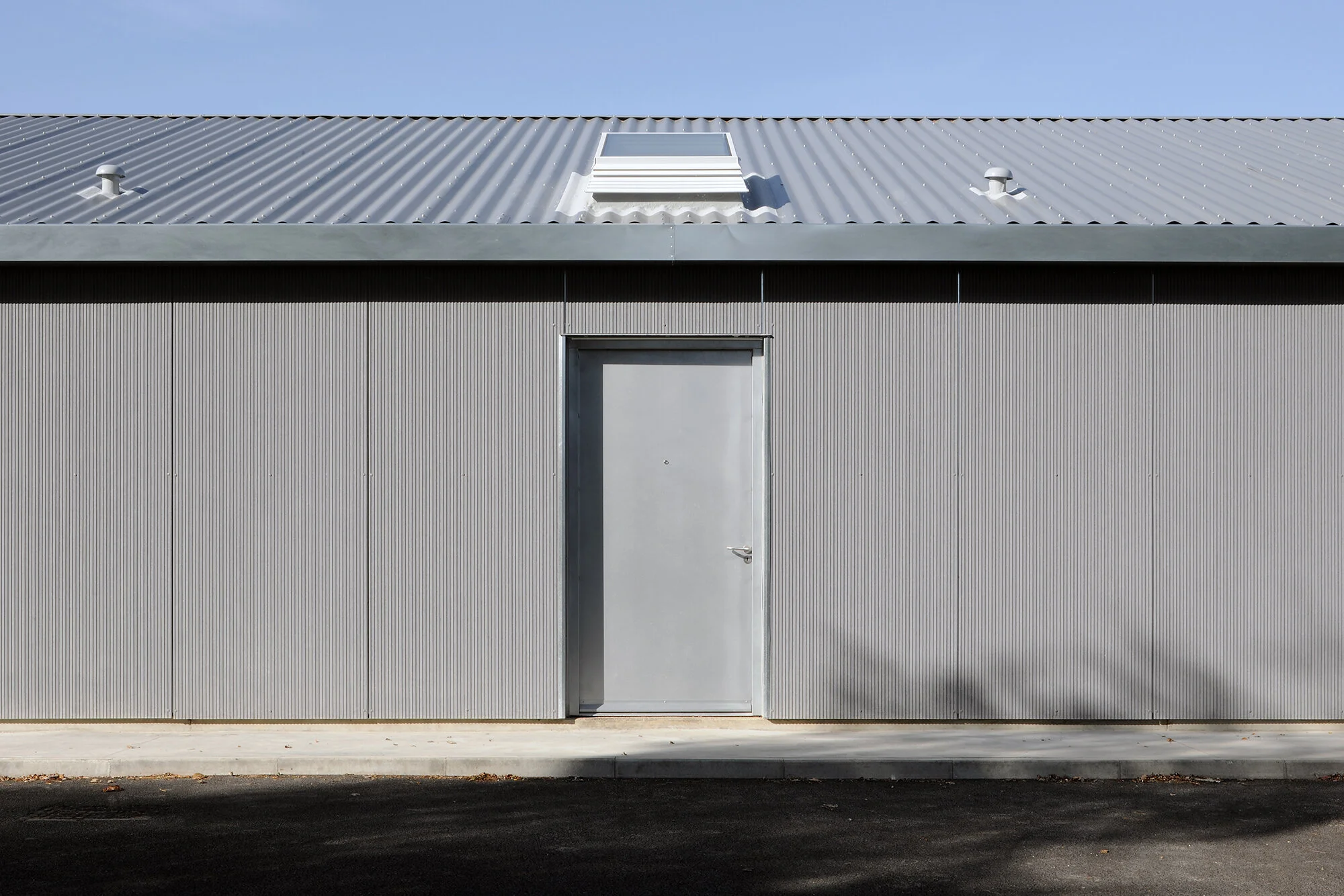
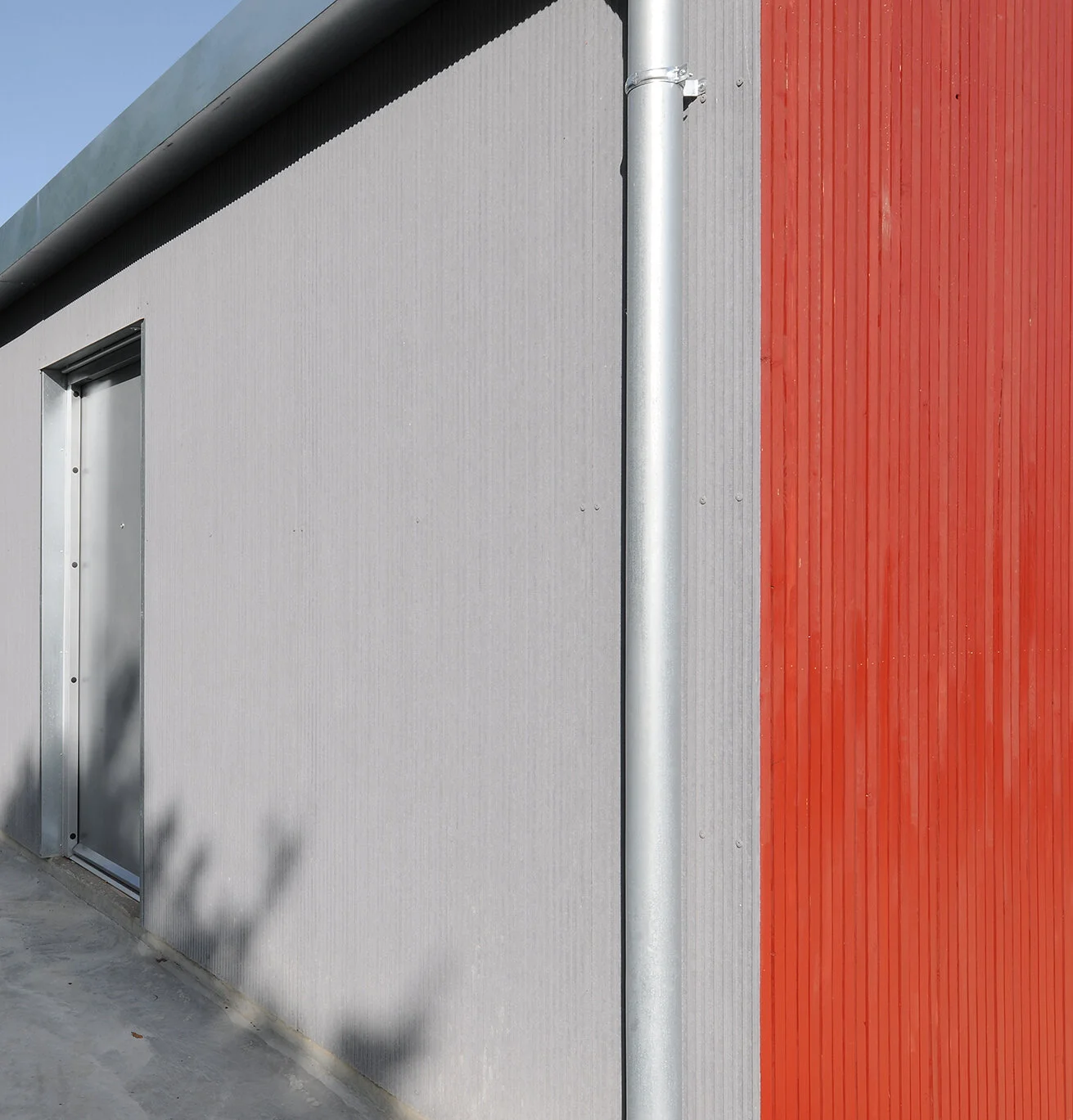
Architecturally, the building draws from an agricultural material palette. A precast plinth, corrugated metal façade, and metal flashings reference nearby farm structures, while large sliding galvanised panels provide both security and visual rhythm. The end gables are clad in larch strips and painted red, reflecting the character of nearby domestic brick buildings. Through this approach, the building acts as a bridge between agricultural and residential forms in the local landscape.
Sustainability is addressed through passive design strategies. An exposed polished concrete slab provides thermal mass, while well-insulated walls ensure a stable and comfortable internal environment throughout the year.
Photographers: David Grandorge
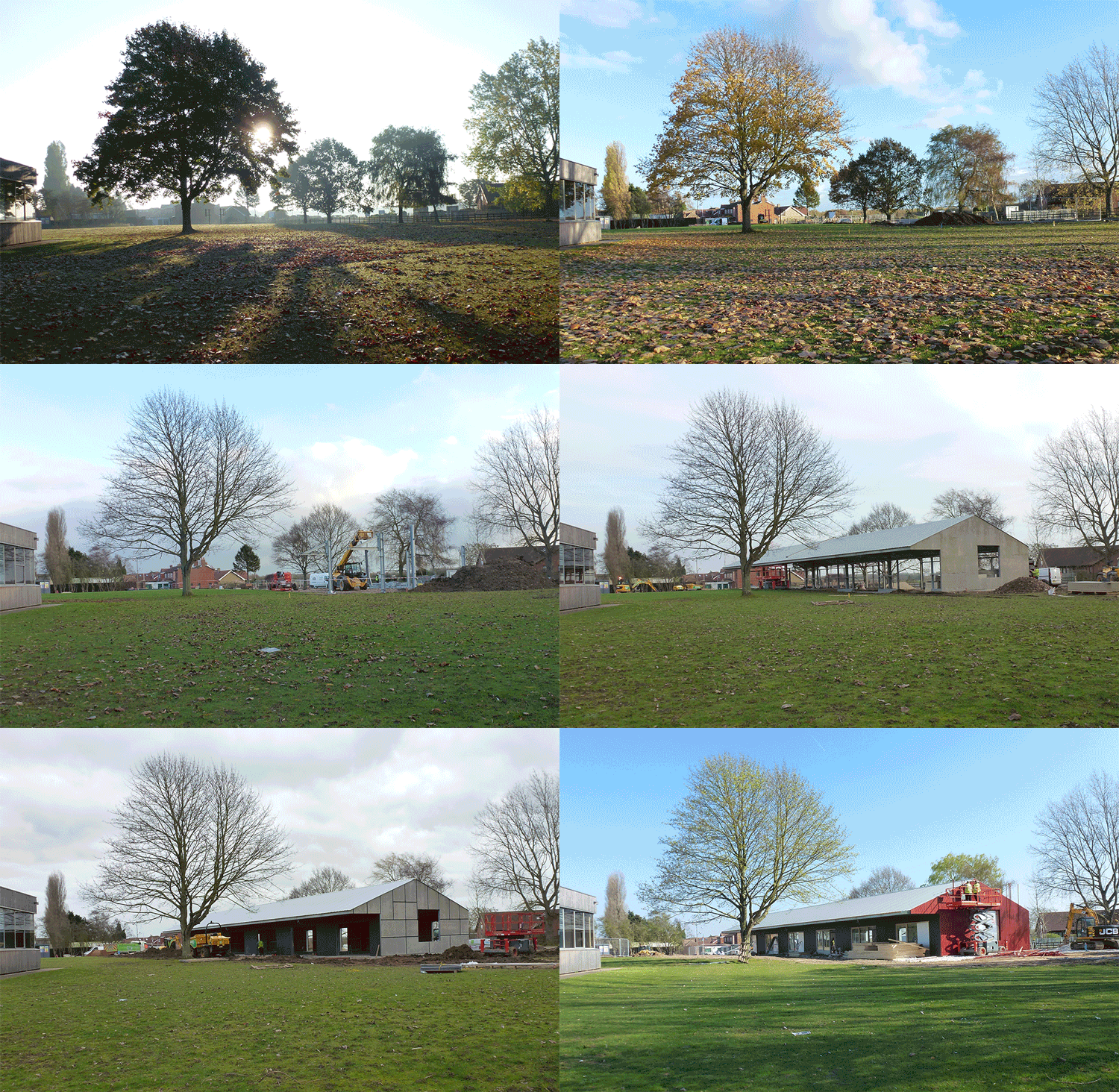
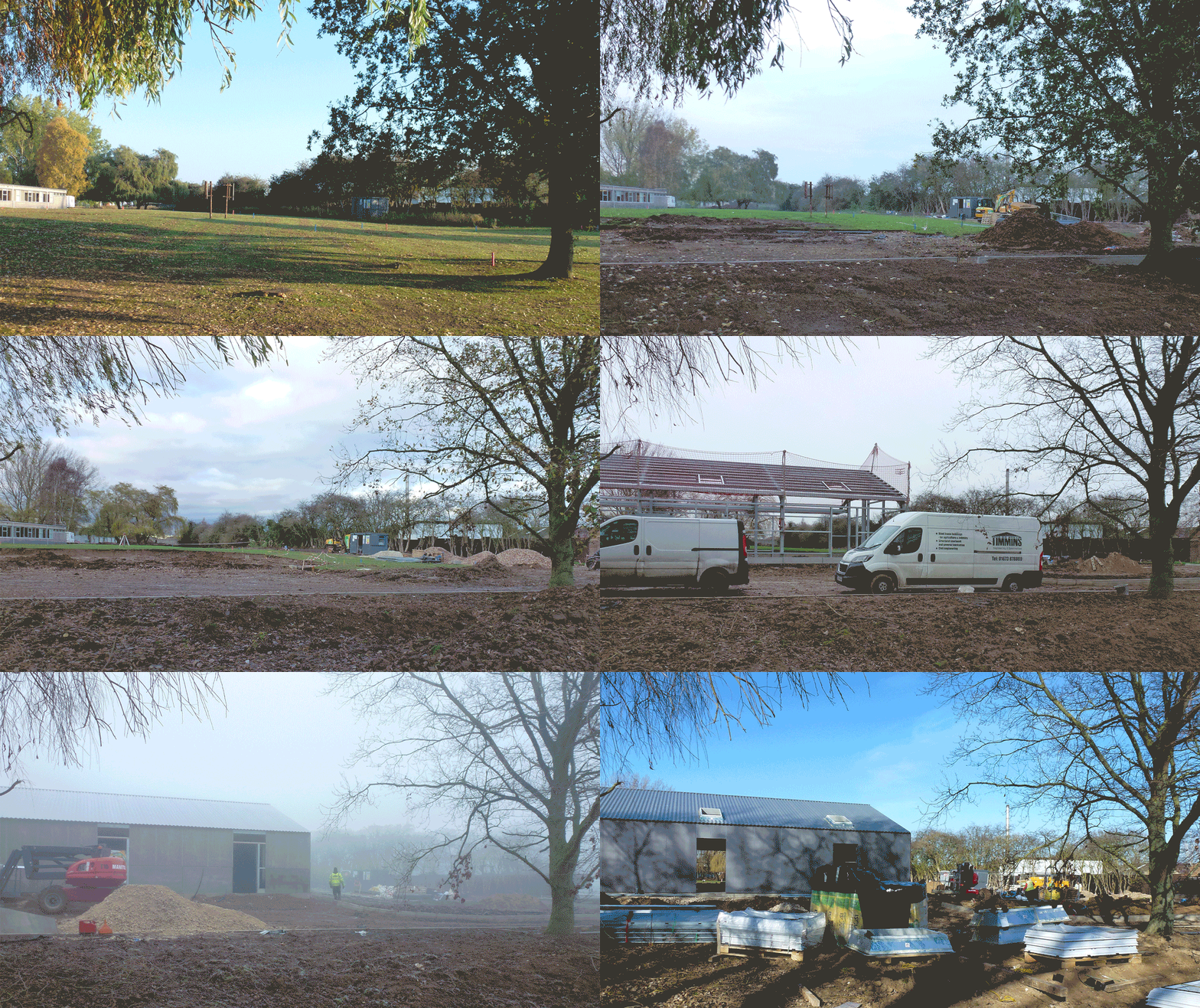
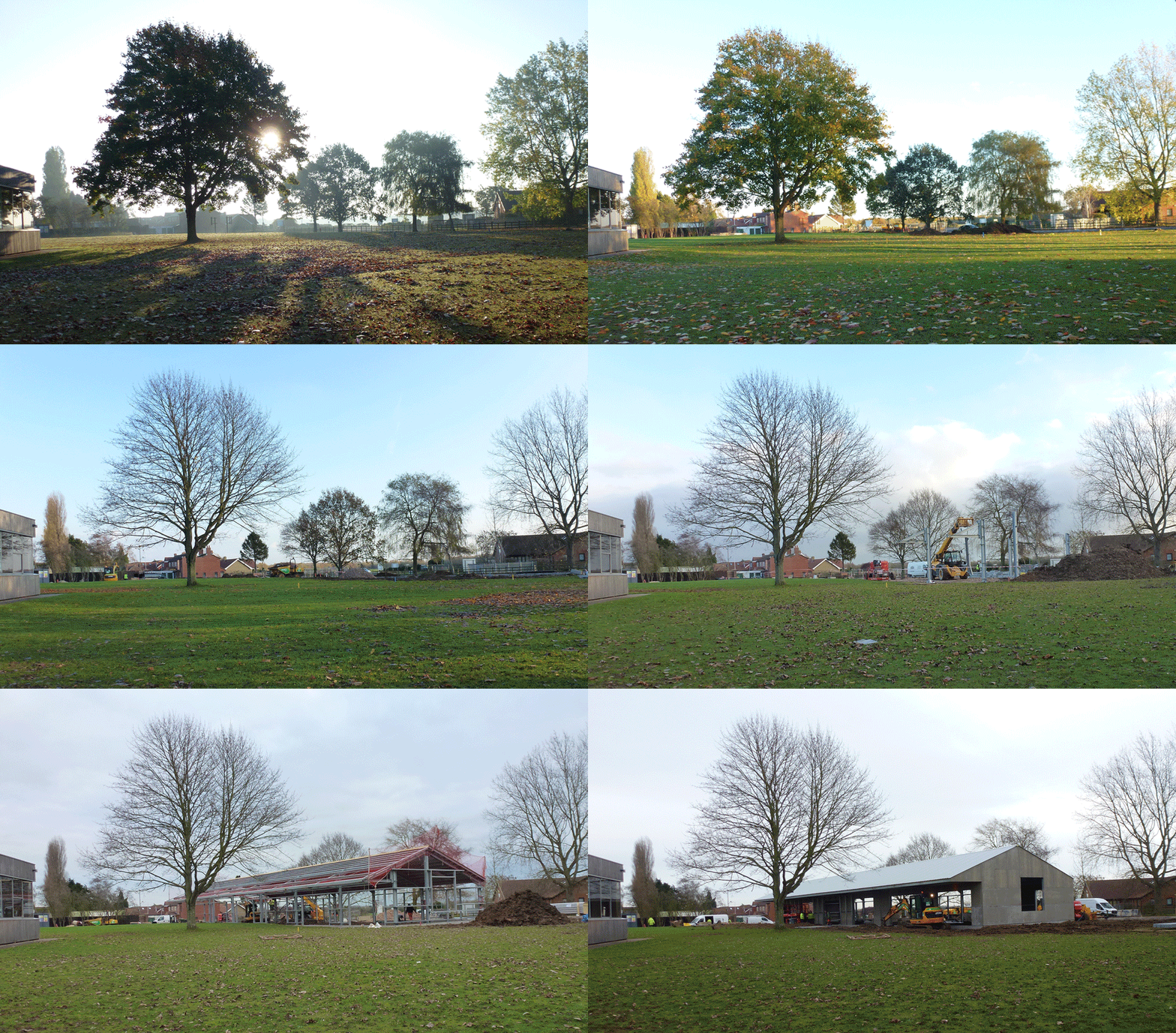
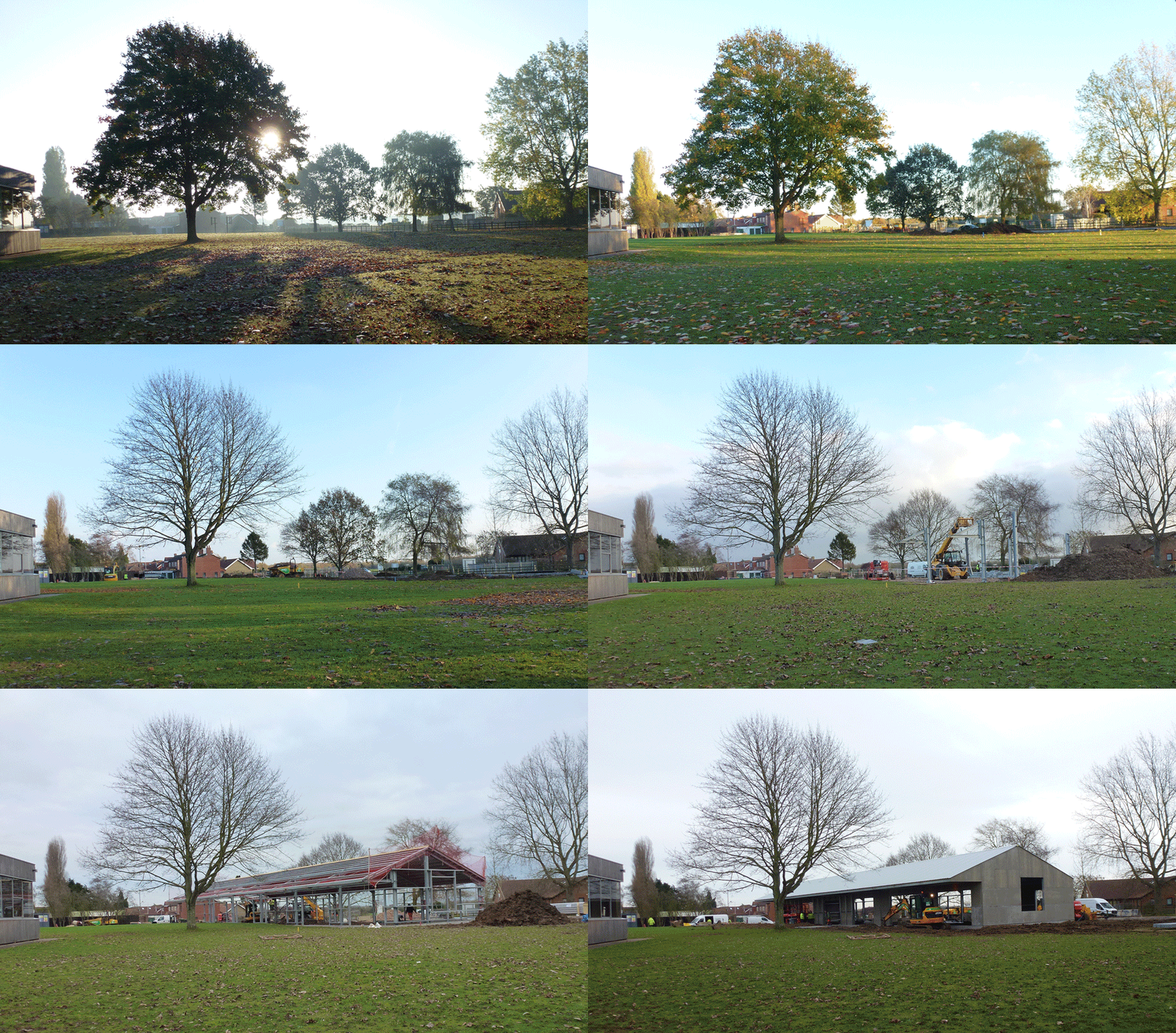
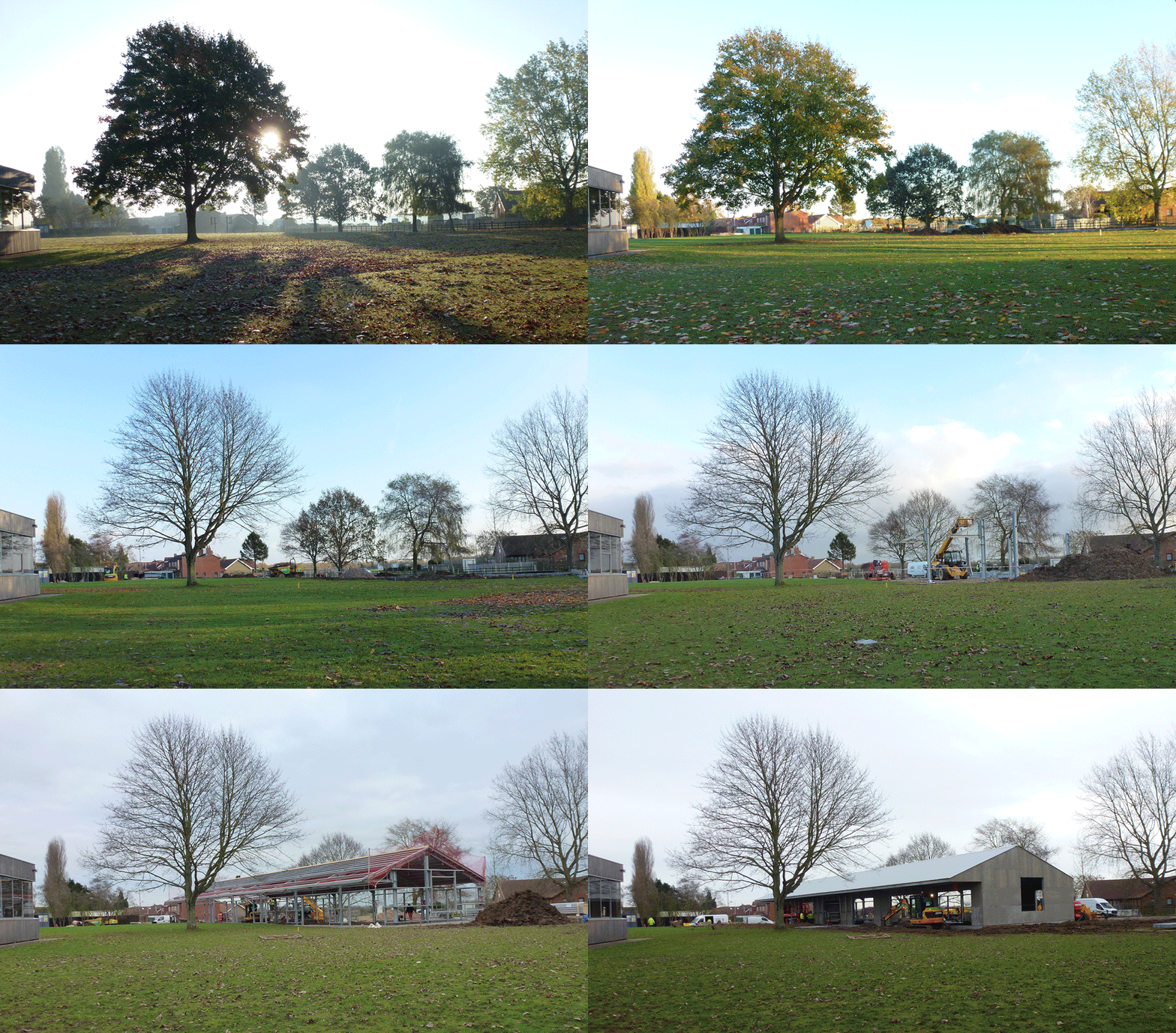
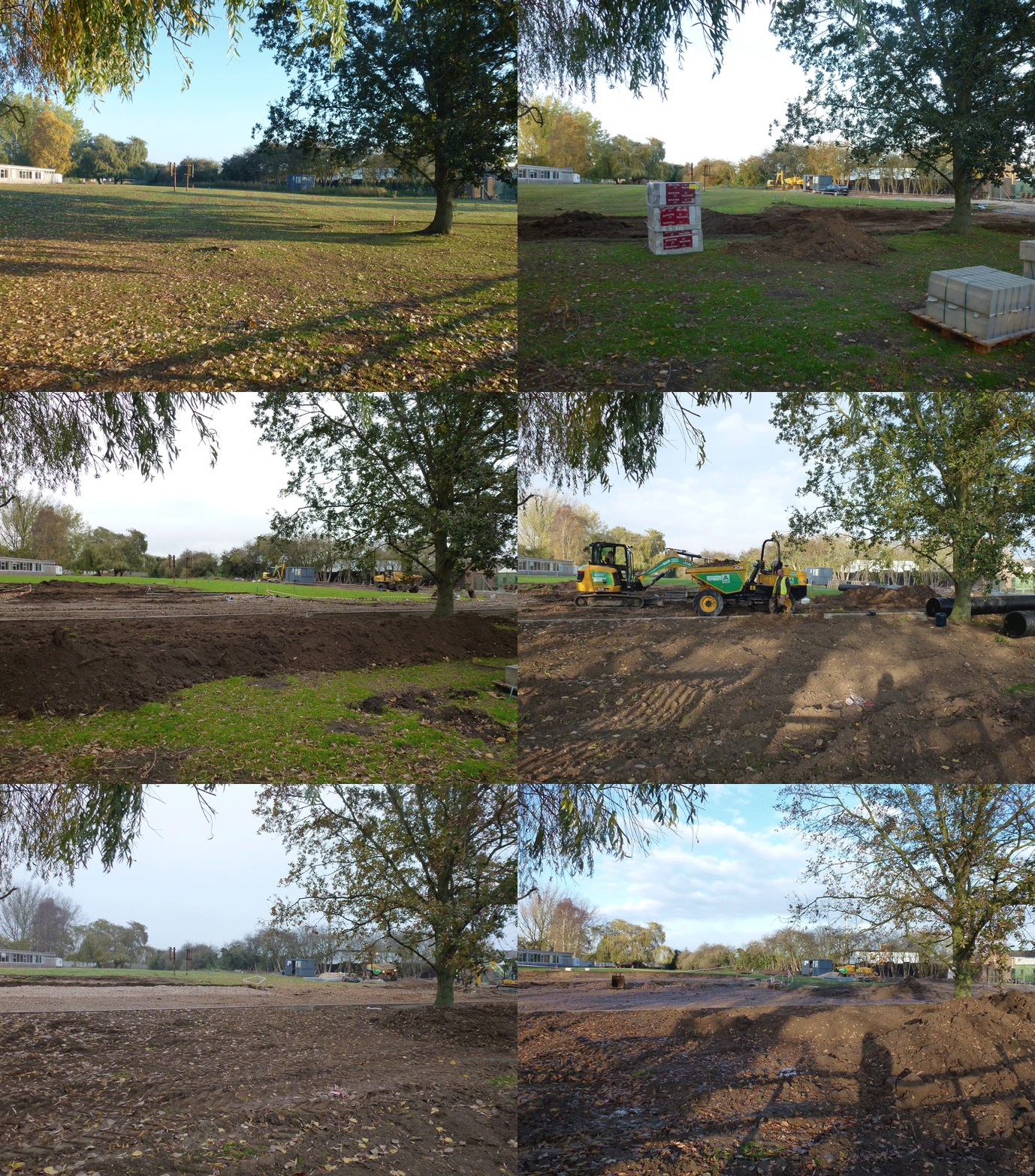
Process

Press
Architects Journal - July 2020
Awards
RIBA East Midlands Regional Award 2020/2021